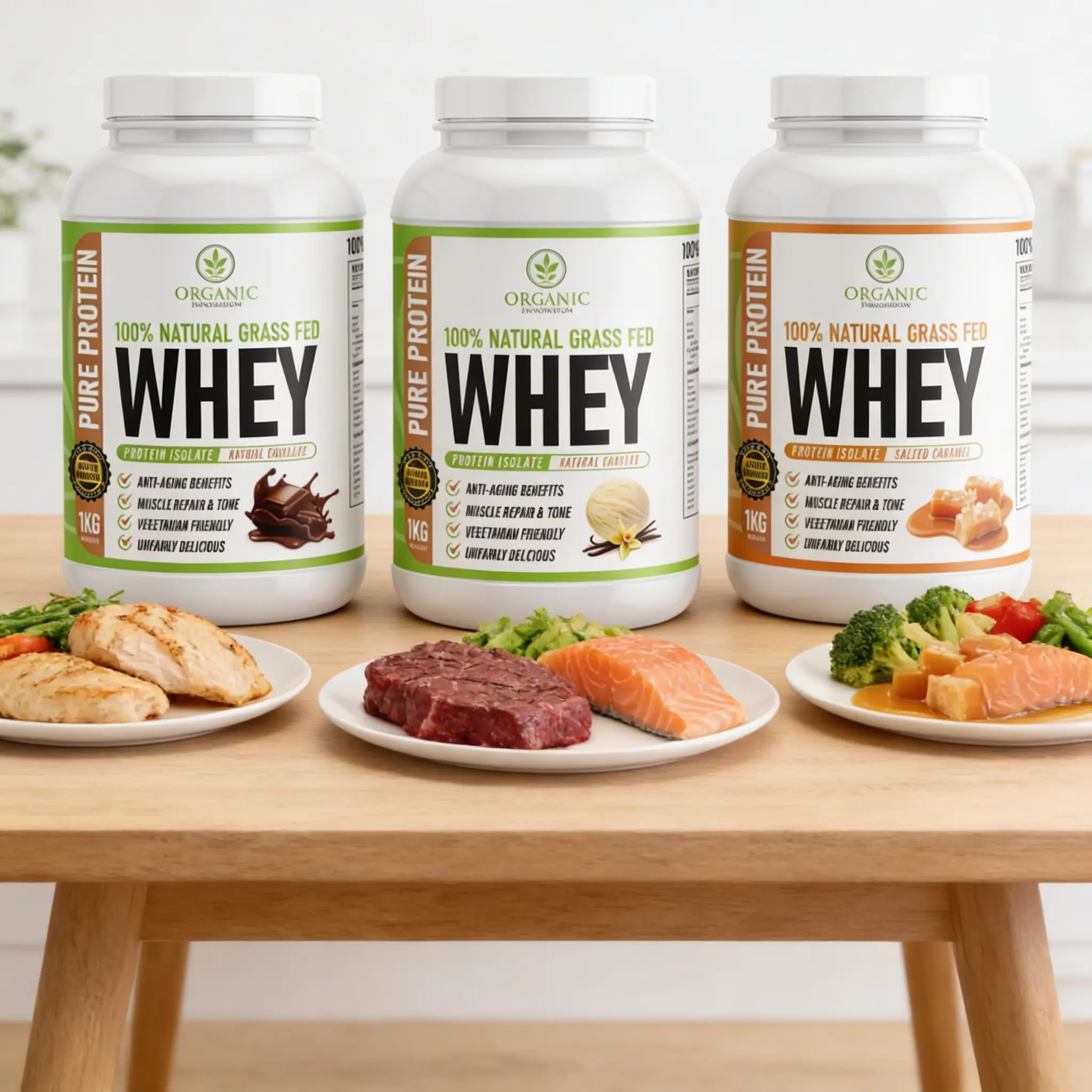
Struggling to hit your daily protein goals in a busy world? Many people face challenges like forgetting meals, picky eating, or simply not getting enough protein from food alone. That’s where whey protein shines as a convenient protein powder solution. This complete guide walks you through everything from the basics of whey protein to smart ways to boost your protein intake seamlessly.
Whether you’re an athlete chasing muscle growth or just aiming for better nutrition, we’ll cover benefits, types, and timing. Get started today with our
Free Nutrition Calculator from Organic Innovation to personalize your protein needs and optimize your routine!
Understanding Whey Protein and Its Benefits
What Is Whey Protein?
Whey protein is a high-quality source of protein derived from dairy during cheese production. The liquid whey byproduct is filtered and dried into a versatile powder. As a complete protein, it contains all essential amino acids your body needs, making it superior for protein supplementation.
This efficient protein source supports daily requirements and active lifestyles. Its rich amino acid profile makes it a top choice for protein.
Key Benefits of Whey Protein
Backed by science, whey protein is ideal for muscle growth, recovery, and convenient supplementation. It supports muscle repair post-workout and boosts lean muscle mass.
For those increasing protein intake, whey protein offers a fast-absorbing protein that maximizes benefits. Studies show this protein source improves strength gains and supports overall protein balance, making it a staple for fitness enthusiasts.
Types of Whey Protein Products
Navigating the types of whey protein can feel overwhelming, but understanding concentrates, isolates, and hydrolysates simplifies your choice. Each offers unique protein content and absorption rates.
Whey Protein Concentrate
Whey protein concentrate is a cost-effective form of whey protein, boasting 70-80% protein content. It’s ideal for beginners seeking an affordable whey concentrate option. This form of whey protein retains beneficial nutrients like immunoglobulins while delivering solid protein per serving.
Whey Protein Isolate
For purer protein, whey protein isolate shines with 90%+ protein levels. As an isolate, it has lower lactose and fat content, making it suitable for sensitive stomachs. Whey protein isolate absorbs faster, delivering amino acids more rapidly for optimal recovery. Isolate is a premium whey isolate choice for clean protein boosts.
Whey Protein Hydrolysate
Whey protein hydrolysate is pre-digested, breaking proteins into peptides for ultra-fast absorption. Among different types of whey protein, this type digests the quickest, making it ideal for elite athletes.
Quick Comparison:
- Concentrate: Budget-friendly, 70-80% protein, some lactose.
- Isolate: High-purity (90%+), low-fat/lactose, fast effects of whey protein isolate.
- Hydrolysate: Premium, pre-digested for instant use.
Whey Protein for Promoting Muscle Growth
Whey protein is a powerhouse for promoting muscle growth, as its complete amino acid profile fuels muscle protein synthesis. This high-quality protein delivers branched-chain amino acids (BCAAs), which are essential for effective muscle building.
Research highlights how whey protein supports muscle growth by stimulating protein turnover post-exercise. For those aiming to increase muscle mass, consuming protein, such as whey, supports lean muscle gains and recovery. The effects include better strength, reduced soreness, and sustained muscle protein synthesis.
Timing matters: pair whey protein with resistance training for peak muscle benefits. It helps build muscle faster than other proteins, supports muscle growth without excess calories, and shows a positive impact on muscle growth.
Pro Tip: Use our free
Nutrition Calculator at Organic Innovation to find your best protein timing and personalized macros instantly.
How to Add Whey Protein Powder to Your Daily Routine
Incorporating whey protein powder elevates your protein intake effortlessly. Start by assessing needs, then get creative with uses and timing.
Determining Your Daily Protein Needs
Aim for 1.6-2.2g of protein per kg bodyweight if active. Factors like workouts influence daily protein intake. Tools help increase their daily protein intake precisely.
Creative Ways to Use Whey Protein
Master the protein shake: blend whey protein powder with milk and fruit. Add to smoothies, bake into muffins, or stir into oatmeal to consume whey protein deliciously. Taking whey protein this way boosts daily protein intake.
Optimal Timing for Whey Protein Consumption
Post-workout is prime time for whey protein – the 30-60 minute window maximizes its effect. Use as meal replacements for steady protein intake. Consistent effect of whey protein supplementation supports long-term gains.
Choosing Quality Whey Protein Products
When you buy whey protein, prioritize products with clear labels listing whey and casein, avoiding fillers or artificial additives. Look for high-quality whey protein that meets Australian purity standards.
Organic Innovation’s premium whey protein range exemplifies this, with clean whey protein products and diverse whey protein options. Different whey proteins, like our whey protein range, ensure third-party testing and no unnecessary extras. Explore high-quality whey protein for trusted results.
Effects of Whey Protein and Possible Side Effects
Positive Effects
The effects of whey protein are profound: whey protein supplementation enhances muscle recovery and supports weight management. Whey protein helps lower blood pressure in some studies—whey protein on blood pressure shows promising data. Whey protein supplementation improves satiety; whey protein appears to boost immunity, too.
Safety Considerations
Whey protein is safe for most, but monitor digestive tolerance with possible side effects like bloating from lactose. Stick to doses of whey protein under 40g per serving and a total amount of protein aligned with needs. The safety of whey protein is well-established at recommended levels.
Whey Protein vs. Other Protein Sources
Whey protein outpaces many as a protein source for fast absorption. Compared to casein protein (slower release), whey excels post-workout. Whey and soy protein supplementation studies favor whey for muscle gains. Opt for whey protein isolate over concentrate for purity.
Protein bars offer convenience but often less protein than powder – choose wisely.
Your Whey Protein Action Plan
Mastering whey protein transforms your nutrition. This protein powerhouse boosts protein supplementation, muscle growth, and daily protein goals effortlessly.
Key Takeaways:
- Choose whey protein isolate for purity and fast effects.
- Time protein intake around workouts for muscle protein synthesis.
- Use whey protein powder creatively to hit protein targets.
- Prioritize quality for safe, effective protein benefits.