Creatine for Women Over 40: What the 2026 Science Says About Strength, Perimenopause, Brain Health & Healthy Ageing
Gurkan Gurgur
September 24th, 2026
For decades, creatine was associated almost exclusively with bodybuilding, powerlifting and young men trying to build muscle.
That perception is changing.
In 2026, creatine has become one of the most talked-about supplements in women’s fitness and healthy ageing — particularly among women approaching or moving through perimenopause and menopause.
And unlike many wellness trends, the growing interest in creatine is supported by a substantial body of research.
Creatine monohydrate is one of the most extensively studied nutritional supplements available. The Australian Institute of Sport (AIS) classifies creatine within its Group A supplement framework — ingredients with strong scientific evidence for use in specific sporting situations.
More importantly, researchers are now paying far greater attention to an area that historically received much less investigation: how creatine affects women specifically.
A major systematic review published in September 2026 examined 34 studies involving 692 female or female-eligible participants. The researchers found possible small positive effects across areas including strength, power, high-intensity performance and lean-mass-related outcomes, while also cautioning that the quality and consistency of female-specific evidence still need to improve.
So what does this actually mean for women over 40?
Let’s look beyond the hype and examine the science.
What Is Creatine?
Creatine is a naturally occurring compound that your body produces and that can also be obtained from foods, particularly meat and fish.
Most of the body’s creatine is stored within skeletal muscle as creatine and phosphocreatine.
During short bursts of high-intensity activity — think resistance training, sprinting or repeated explosive movements — phosphocreatine helps regenerate adenosine triphosphate (ATP), the body’s immediate cellular energy source.
The Australian Institute of Sport explains that creatine supplementation can increase skeletal-muscle creatine and phosphocreatine stores and subsequently improve the body’s capacity for high-intensity exercise.
There is also creatine in the brain, where it contributes to cellular energy production, which has helped drive growing scientific interest in creatine beyond sport and muscle alone.
Importantly, creatine monohydrate remains the form with the strongest research foundation.
For anyone considering supplementation, complicated proprietary versions of creatine are therefore not necessarily an advantage. The AIS states that there is no scientific reason to choose another form of creatine over creatine monohydrate.
Why Are More Women Over 40 Looking at Creatine?
The years surrounding perimenopause and menopause can bring changes in muscle mass, strength, body composition, sleep, recovery and overall physical function.
That makes maintaining skeletal muscle increasingly important.
The Australian Government launched its National Menopause and Perimenopause Awareness Campaign in May 2026, reflecting growing public interest in evidence-based information around this stage of women’s health. The Government reports that around half of women experience mild-to-moderate symptoms and around one in four experience symptoms severe enough to affect everyday activities.
Creatine does not treat menopause, nor should it be positioned as a solution to hormonal change.
But it is increasingly being researched as one part of a broader strategy centred around resistance training, adequate protein, good nutrition, recovery and maintaining muscle as we age.
A review examining creatine throughout the female lifespan noted that changes in creatine metabolism may occur across different stages of female physiology and highlighted potential applications around exercise performance, body composition and brain energetics.
Creatine, Muscle and Strength After Menopause
This is where some of the most relevant new research has emerged.
A 2026 systematic review and meta-analysis specifically examined creatine supplementation in postmenopausal women.
Researchers analysed seven randomised controlled trials involving 608 women, with an average age of approximately 62.
Creatine supplementation was associated with a modest increase in lean mass and an improvement in leg-press strength. The clearest benefits appeared when women consumed at least 5 grams of creatine per day while participating in resistance training.
That last point is important.
Creatine does not replace strength training.
Rather, the evidence suggests it may help support the adaptations produced by training.
For healthy ageing, that matters enormously because preserving muscle is not simply about appearance.
Muscle contributes to physical strength, movement, balance, metabolic health and the ability to remain active and independent later in life.
The most powerful strategy remains remarkably simple:
Use your muscles consistently — and give your body the nutrition and recovery required to maintain them.
Creatine may be one tool within that bigger picture.
What Does the Latest 2026 Research Say About Women Who Exercise?
Female-specific research has historically lagged behind research involving male athletes.
That gap is beginning to close.
On 4 September 2026, researchers published one of the most comprehensive analyses to date examining creatine supplementation in females engaged in exercise or structured training.
The systematic review included 34 studies involving 692 female or female-eligible participants, while 21 studies were suitable for the primary statistical analysis.
Researchers observed small positive average effects in exercise and sport performance and body-composition outcomes. However, they rated the certainty of much of the evidence as low or very low because studies differed significantly in training protocols, supplementation strategies and outcome measures.
That’s actually an important lesson in responsible health information.
Creatine has considerable research behind it, but that does not mean every woman will experience exactly the same result.
The evidence supports potential benefits — not guarantees.
What About Creatine and Brain Health?
This is one of the most fascinating areas of current creatine research.
Although creatine is heavily concentrated in muscle, it is also present in the brain, where the creatine-phosphocreatine system contributes to cellular energy availability.
Research has therefore explored potential effects on memory, attention and cognitive performance.
A 2024 systematic review and meta-analysis of 16 randomised controlled trials involving 492 adults reported improvements in some measures of memory, attention time and processing speed, but did not find significant improvements in overall cognitive function or executive function.
Other researchers have been more cautious.
A separate systematic review concluded that while creatine supplementation can increase brain creatine concentrations, evidence for broad improvements in cognition remains inconsistent.
So while the area is promising, claims that creatine universally eliminates brain fog or dramatically improves cognitive performance go beyond what the current evidence can confidently support.
That’s why we prefer to distinguish established science from emerging science.
Will Creatine Make Women Bulky?
This remains one of the most common misconceptions surrounding creatine.
Creatine itself does not suddenly make someone bulky.
Significant muscle growth requires consistent resistance training, adequate energy and protein intake, progressive overload and time.
Creatine may help someone train more effectively and support increases in lean mass alongside training, but it does not create large amounts of muscle independently.
Some users may notice an increase in body weight when beginning creatine — particularly during traditional loading protocols — because increasing muscle creatine also increases water held within muscle tissue.
That should not automatically be confused with gaining body fat.
Is Creatine Safe for Women?
Creatine monohydrate has been extensively investigated.
A systematic review and meta-analysis examining adverse outcomes specifically in women evaluated studies involving 951 participants and found no significant increase in overall adverse events, gastrointestinal effects, weight gain, or measures of kidney and liver dysfunction compared with controls.
The 2026 review involving postmenopausal women similarly reported that adverse events were generally mild and comparable with placebo, while measured renal indicators remained unchanged.
As with any supplement, individual circumstances matter.
People who are pregnant or breastfeeding, have kidney disease, are taking medications that may affect kidney function, or are managing a medical condition should discuss supplementation with an appropriately qualified healthcare professional.
How Much Creatine Do Women Need?
The most commonly researched maintenance intake is approximately 3–5 grams of creatine monohydrate per day.
According to the AIS, people can either use a loading strategy or simply consume 3–5 grams daily. Without loading, muscle creatine stores generally move toward saturation over approximately four weeks.
For most everyday users, simplicity and consistency are arguably more important than making supplementation complicated.
And that is where format can make a meaningful difference.
Traditional creatine powder is effective, inexpensive and extensively researched.
But not everyone enjoys measuring scoops, mixing drinks or carrying powder around throughout the day.
A pre-dosed gummy offers another way to incorporate creatine monohydrate into a daily routine.
Creatine Gummies: Convenience Without Guesswork
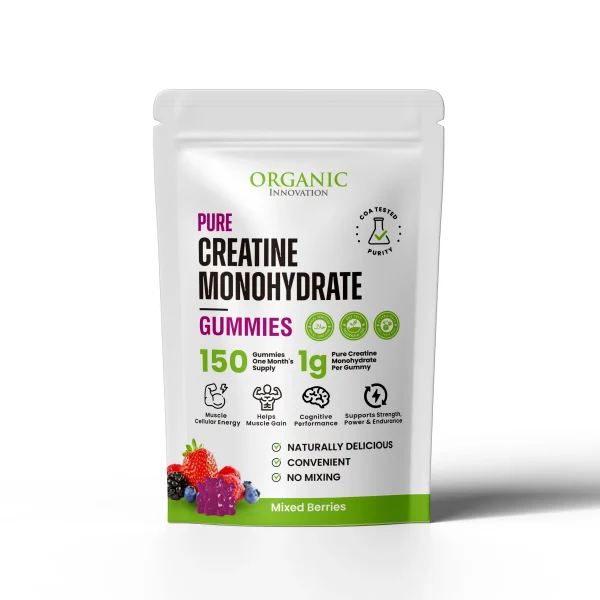
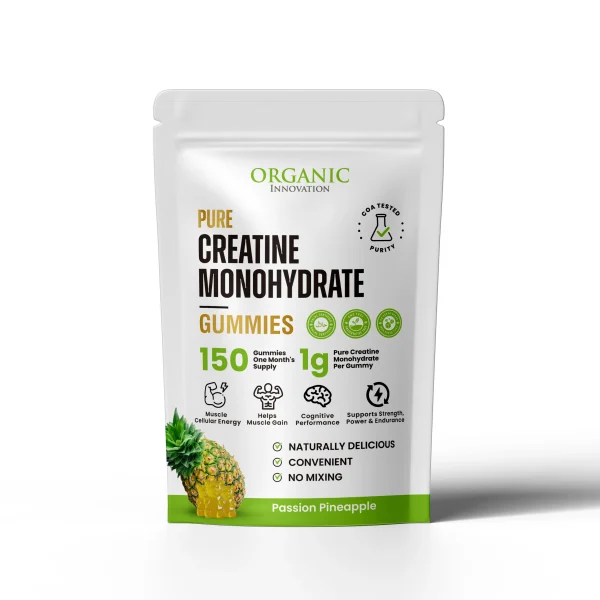
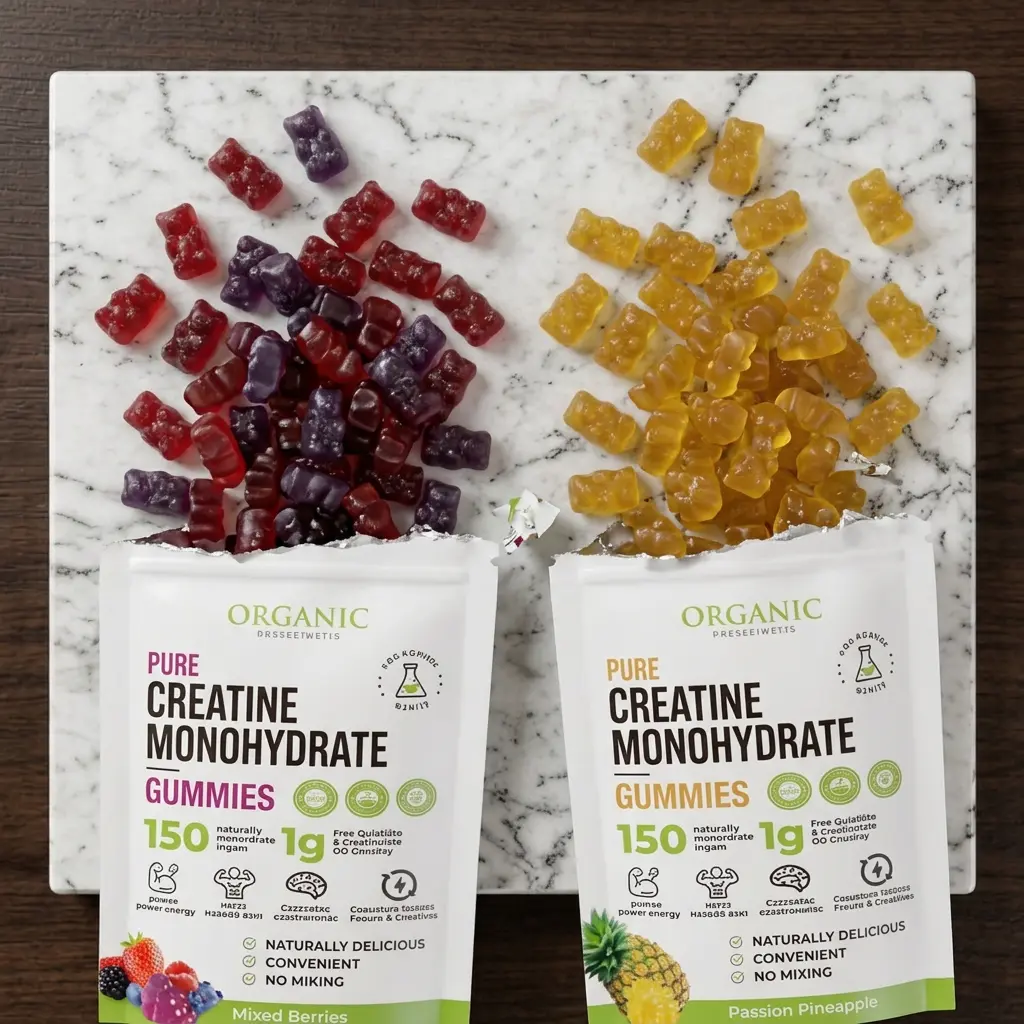
Organic Innovation’s Pure Creatine Monohydrate Gummies contain 1 gram of creatine monohydrate per gummy, allowing users to adjust their intake in precise 1-gram increments.
Rather than replacing creatine science with a new ingredient, the idea was simple:
Take an extensively researched compound and make daily consistency easier.
The gummies are naturally flavoured, COA tested and third-party verified for purity and quality.
For readers wanting to understand creatine more deeply before deciding whether gummies or powder better suit their lifestyle, you can also read our guide:
Science should come first — but real-world experience matters when evaluating things such as taste, convenience and how easily a product fits into someone’s routine.
Organic Innovation’s current creatine range has accumulated substantial customer feedback.
At the time of publication, the Passion Pineapple Creatine Gummies have 62 customer reviews with a displayed 5-star rating, while the Mixed Berries variety has 55 reviews with a displayed 5-star rating.
One recurring theme within customer feedback is convenience: customers describe gummies as easier to incorporate consistently because there is no powder to measure or drink to mix.
The bigger picture remains resistance training, adequate protein, regular physical activity, quality sleep, sensible nutrition and maintaining a healthy lifestyle you can actually sustain.
Creatine is compelling precisely because it fits into those fundamentals rather than attempting to replace them.
The latest research suggests that women may experience benefits across selected measures of strength, performance and lean mass, while research into cognition and women’s health continues to evolve.
For women over 40, the goal shouldn’t simply be to look younger.
It should be to remain strong, capable, energetic and independent for longer.
That is what healthy ageing should ultimately be about.
The Bottom Line
Creatine is no longer a supplement that belongs exclusively in the bodybuilding section of the conversation.
It is one of the most extensively researched compounds in sports nutrition, and emerging female-specific research is expanding our understanding of its potential applications throughout different stages of life.
For women over 40, the most convincing current evidence surrounds strength, training performance and preservation or improvement of lean mass — particularly when creatine is combined with resistance training.
Research surrounding cognition and female-specific physiology is promising, but still developing.
That distinction matters.
At Organic Innovation, our philosophy is simple: follow the evidence, avoid exaggerated promises, prioritise ingredient quality and make healthy habits easier to maintain consistently.
Because longevity is rarely built through one dramatic decision.
It is built through the small things you are willing to do consistently.
Australian Institute of Sport — Creatine: What Is It? The AIS explains creatine metabolism, muscle phosphocreatine and its evidence-supported use in performance. Read the AIS resource
Australian Institute of Sport — How and When Do I Use Creatine? Covers established loading and 3–5 g/day maintenance protocols. Read the AIS dosing guide
Naddafha et al., 2026 — Creatine Monohydrate for Lean Mass, Strength and Bone Density in Postmenopausal Women. Systematic review and meta-analysis of seven randomised trials involving 608 women. Read the study on PubMed
Lin, Zhu & Hong, 2026 — Effects of Creatine Supplementation in Females Engaged in Exercise or Training. One of the newest female-specific systematic reviews and meta-analyses, published September 2026. Read the full 2026 study
Tam, Mitchell & Forsyth, 2025 — Does Creatine Supplementation Enhance Performance in Active Females? Systematic review examining female-specific exercise research. Read the review on PubMed
Smith-Ryan et al. — Creatine Supplementation in Women’s Health: A Lifespan Perspective. Reviews female creatine physiology across different life stages. Read the full PubMed record
de Guingand et al. — Risk of Adverse Outcomes in Females Taking Oral Creatine Monohydrate. Systematic review and meta-analysis examining female safety data. Read the safety review on PubMed
Xu et al., 2024 — Effects of Creatine Supplementation on Cognitive Function in Adults. Systematic review and meta-analysis examining memory, attention and other cognitive outcomes. Read the cognitive review on PubMed
Australian Government Department of Health — National Menopause and Perimenopause Awareness Campaign. Australian evidence-based public-health information about perimenopause and menopause. Australian Government perimenopause resource
Modern life places constant demands on the body. Processed foods, alcohol, environmental pollutants, poor sleep, chronic stress, sedentary lifestyles and nutritional deficiencies can all influence how well we feel and function. It is therefore understandable why “detoxing” and strengthening the immune system have become such major areas of interest. But there is an important difference […]
In a supplement industry filled with new ingredients, complicated formulas and constantly changing trends, very few products have stood the test of time quite like creatine monohydrate. Creatine is not a new discovery, a passing fitness trend or an ingredient built around clever marketing. It is one of the most extensively researched sports nutrition supplements […]
In today’s world, our bodies are exposed to more environmental stressors than ever before. Ultra-processed foods packed with artificial colours, flavours and preservatives, frequent takeaway meals cooked in highly refined seed and vegetable oils, air pollution, pesticides, microplastics found in food packaging and drinking water, and trace amounts of heavy metals from our environment all […]